Infrared technology is used in patients’ bedrooms and can monitor their breathing and pulse.


Infrared technology is used in patients’ bedrooms and can monitor their breathing and pulse.
The charity recently lost out on a bid for funding and now might have to close its waiting list.
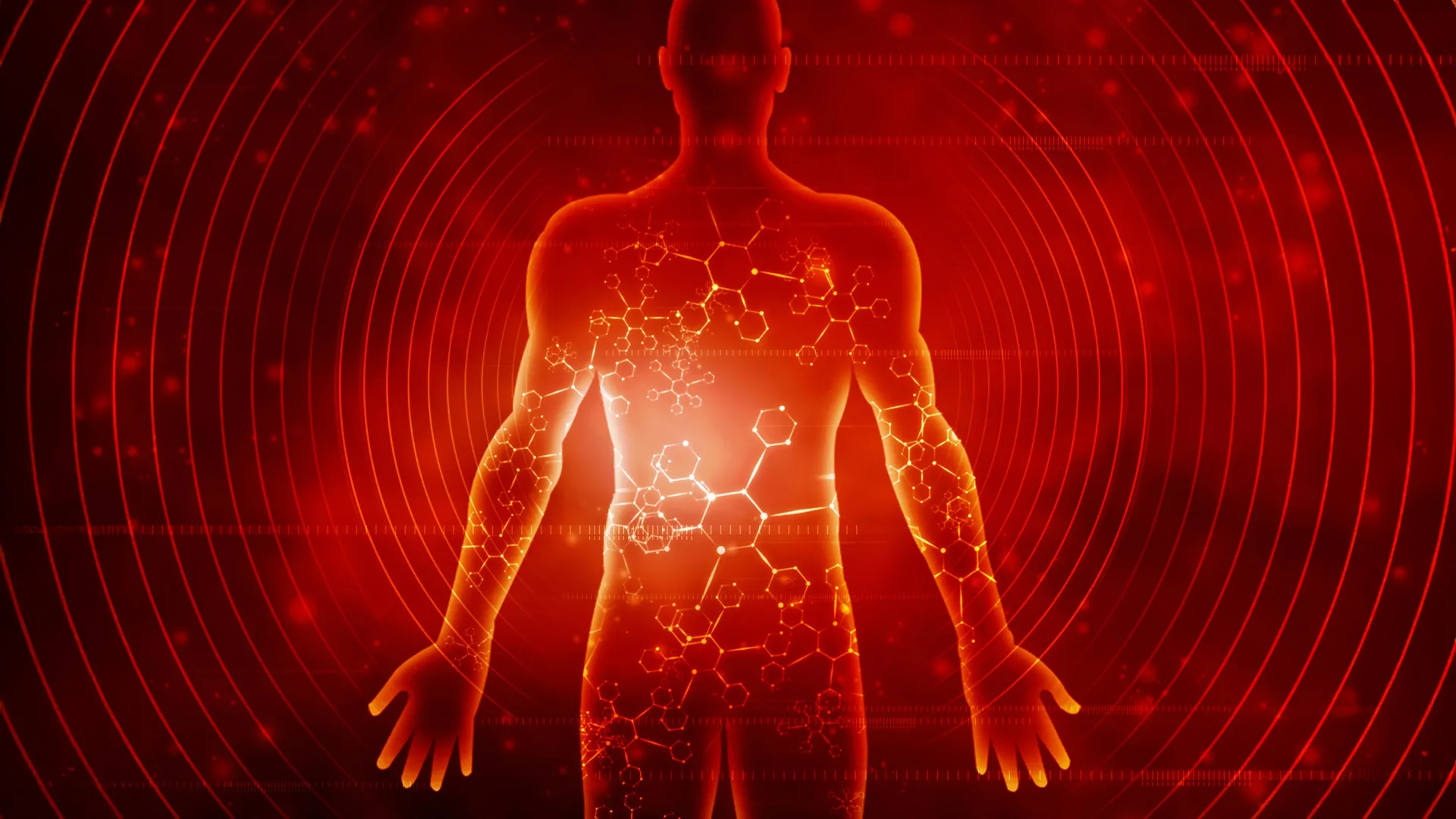
Going without food for several days does far more than force the body to burn stored fat. Research published in 2024 found that prolonged fasting produces widespread and coordinated biological changes across multiple organs, with some of the most notable effects appearing only after about three days without calories.
The findings, published in Nature Metabolism, offer an unusually detailed look at how the human body responds during an extended fast. Researchers found evidence of biological effects that went beyond weight loss, although many of the potentially health related changes did not become apparent until participants had gone roughly three days without food.
Scientists from Queen Mary University of London’s Precision Healthcare University Research Institute (PHURI) and the Norwegian School of Sports Sciences conducted the work. By identifying the molecular changes associated with fasting, the researchers hope to provide a foundation for future studies that could eventually lead to treatments capable of reproducing some of fasting’s effects.
That could be especially important for people who might benefit from certain biological effects of fasting but cannot safely undergo a prolonged fast or follow fasting mimicking approaches such as ketogenic diets.
How the Body Adapts to Fasting
Humans have evolved to tolerate extended periods without food, an ability that was essential during times when meals were unpredictable. Today, millions of people fast for cultural, religious, medical, or weight loss purposes.
Fasting also has a long history in medicine. It has been used in various forms to help manage conditions including epilepsy and rheumatoid arthritis.
One of the clearest changes during fasting involves the body’s energy supply. Under normal conditions, much of the body’s readily available energy comes from glucose derived from food. Once that incoming energy disappears, the body gradually begins drawing more heavily on stored fat.
Scientists already understood that basic metabolic shift. What has been much less clear is what prolonged fasting does throughout the rest of the body, including whether it produces biological changes that could be beneficial, harmful, or both (beneficial or adverse).
Modern protein analysis has made it possible to investigate those questions in far greater detail. Proteins carry out an enormous range of jobs in the body, from building tissues to controlling chemical reactions and transmitting signals between cells. Measuring thousands of proteins in the bloodstream can therefore provide a broad picture of how different organs and biological systems are responding.
Tracking a Seven-Day Water-Only Fast
For the study, researchers followed 12 healthy volunteers who completed a seven-day water-only fast.
Participants were closely monitored each day. The scientists measured changes in about 3,000 proteins in their blood before the fast, throughout the fasting period, and after they began eating again.
The researchers then combined those protein measurements with genetic information from large population studies. This allowed them to investigate which biological pathways were changing during fasting and to predict some of the possible health consequences associated with those changes.
As expected, the body began shifting away from glucose and toward stored fat as a major energy source during the first two or three days without food.
Participants lost an average of 5.7 kilograms during the fast, with the loss coming from both fat mass and lean mass. Lean mass includes tissues that are not body fat, such as muscle and other water-rich tissues.
Three days after participants resumed eating, their overall weight remained below where it had started. However, most of the lost lean mass had returned, while the reduction in fat mass remained.
A Major Shift Appeared Around Day Three
The most striking finding involved what happened after approximately three days of fasting.
At that point, researchers began detecting distinct changes in the levels of proteins throughout the body. The pattern suggested that complete calorie restriction was producing a coordinated whole body response rather than simply altering how the body obtained energy.
About one third of all the proteins measured changed significantly during the fasting period, with effects linked to all major organs.
Many of those changes appeared consistently among the participants. The researchers also detected biological signatures that could not be explained by weight loss alone.
One example involved changes in proteins associated with the structural support of neurons in the brain. Neurons are the specialized cells that transmit information throughout the nervous system, and the proteins surrounding and supporting them help maintain their structure and function.
The results suggest that prolonged fasting may influence a much wider range of biological processes than simply fat metabolism.
Potential Benefits Extend Beyond Weight Loss
Claudia Langenberg, Director of Queen Mary’s Precision Health University Research Institute (PHURI), said:
“For the first time, we’re able to see what’s happening on a molecular level across the body when we fast. Fasting, when done safely, is an effective weight loss intervention. Popular diets that incorporate fasting – such as intermittent fasting – claim to have health benefits beyond weight loss. Our results provide evidence for the health benefits of fasting beyond weight loss, but these were only visible after three days of total caloric restriction – later than we previously thought.”
The timing is important. Intermittent fasting can involve much shorter periods without food, while this study examined complete calorie restriction lasting several days. The results therefore do not mean that shorter fasting schedules necessarily produce the same effects.
Instead, the study helps identify when some of the more substantial molecular responses to prolonged fasting begin to appear.
Could Scientists Reproduce Fasting’s Effects?
Understanding why fasting produces particular biological changes could eventually prove more important than fasting itself.
If researchers can determine which molecular pathways are responsible for potentially beneficial effects, it may become possible to develop treatments that activate those pathways without requiring patients to stop eating for several days.
That possibility could be especially useful for people whose medical conditions make prolonged fasting impractical or unsafe.
Maik Pietzner, Health Data Chair of PHURI and co-lead of the Computational Medicine Group at Berlin Institute of Health at Charité, said:
“Our findings have provided a basis for some age-old knowledge as to why fasting is used for certain conditions. While fasting may be beneficial for treating some conditions, often times, fasting won’t be an option to patients suffering from ill health. We hope that these findings can provide information about why fasting is beneficial in certain cases, which can then be used to develop treatments that patients are able to do.”
The study provides a detailed molecular map of how the human body adapts during prolonged fasting. It also highlights a notable threshold: while the switch toward burning stored fat begins within the first few days, many of the broader biological changes associated with fasting become detectable only after about three days without calories.
That distinction could help researchers separate the effects of weight loss from the deeper biological responses triggered by extended fasting, while providing new clues about how those responses might someday be reproduced without requiring people to undergo prolonged periods without food.
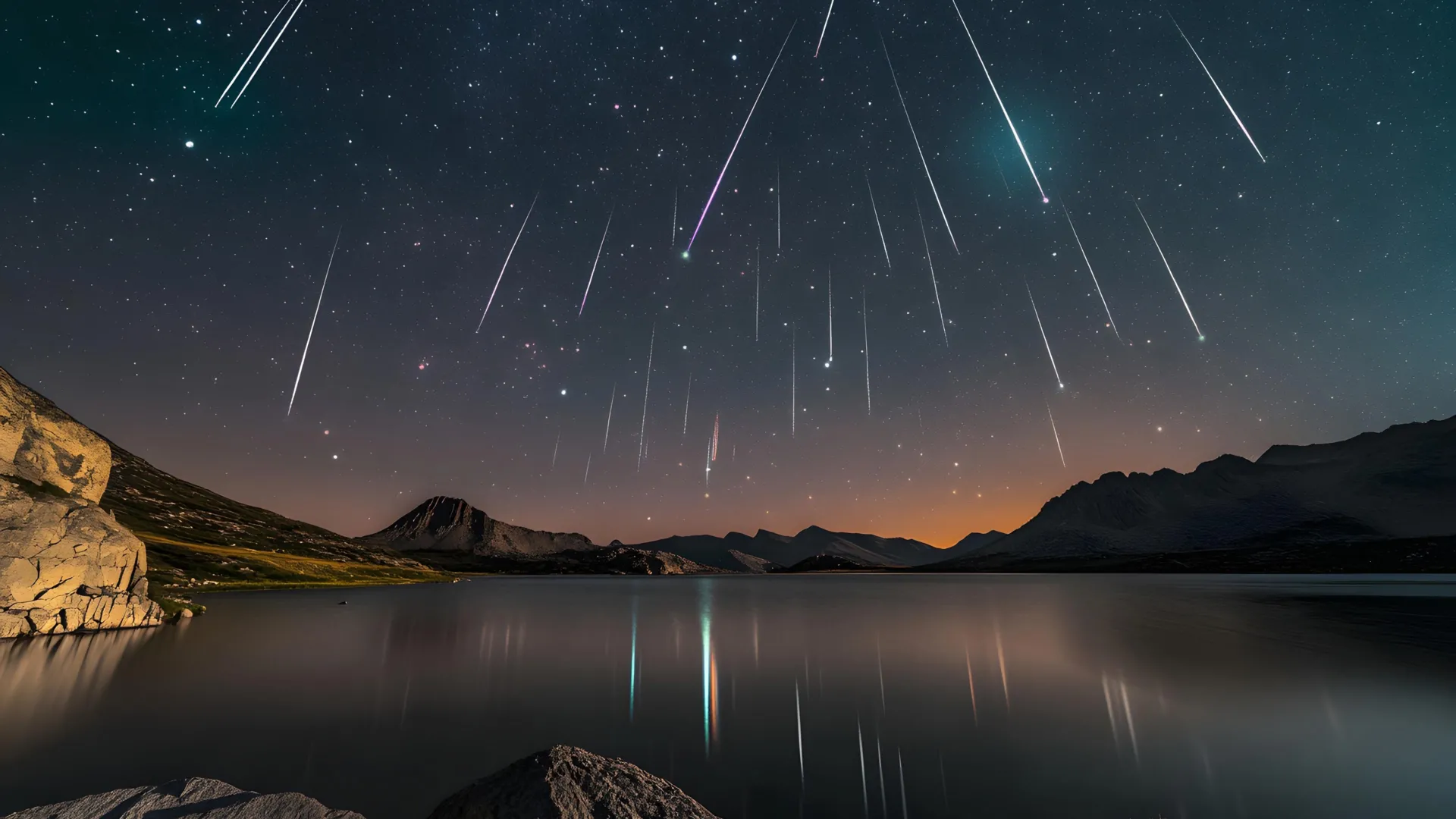
October offers several memorable sights for skywatchers, including Saturn at opposition, the Orionid meteor shower, and a close pairing of the Moon and the Pleiades, also known as the Seven Sisters.
Skywatching Highlights
Saturn leads October’s celestial lineup, followed later in the month by meteors linked to Halley’s Comet and a close encounter between the Moon and one of the best known star clusters in the night sky. Together, these events make October a busy month for anyone looking up after sunset or before dawn.
[See Video Link After Article.]
Saturn Reaches Opposition
On October 4th, Saturn reaches opposition, offering one of the best viewing opportunities of the year for the ringed planet.
Opposition occurs when Earth moves between the Sun and Saturn. From our perspective, Saturn then appears on the opposite side of the sky from the Sun. As a result, the planet rises around sunset and remains visible for much of the night.
Saturn is also drawing scientific attention because of unusual activity in its atmosphere. Astronomers have long studied a hexagon shaped jet stream stretching nearly 20,000 miles across the planet’s north pole.
More recently, observations from NASA’s Hubble Space Telescope revealed a ten sided atmospheric wave surrounding Saturn’s south pole. The feature, located in the southern hemisphere, appears to be growing stronger. That gives researchers a rare chance to observe a massive atmospheric structure as it develops.
Orionid Meteor Shower Peaks in October
The Orionid meteor shower reaches its peak during the night of October 21st and into the morning of October 22nd.
These meteors come from small pieces of material left behind by Halley’s Comet. Although the Orionids appear to originate from the direction of the constellation Orion, individual meteors can flash across any area of the sky.
Viewing conditions will not be ideal for the entire night this year. A bright waxing gibbous Moon is expected to overpower some of the fainter meteors.
The best opportunity to see the shower may arrive during the few hours before dawn, after the Moon has set. For better viewing, find a dark location away from bright lights, allow your eyes time to adjust, and scan as much of the sky as possible.
The Moon Meets the Seven Sisters
Another striking sight arrives on the night of October 27th into the 28th, when the Moon passes close to the Pleiades star cluster, also known as the Seven Sisters.
The Pleiades have inspired stories in many ancient cultures. Part of their widespread importance may come from the fact that the cluster can be seen from nearly every part of the world.
To find the pairing, look toward the east during the evening as the Moon and the Pleiades rise higher in the sky. To the unaided eye, the cluster looks like a slightly hazy group of 6 to 7 stars.
No special equipment is required to see the Pleiades, but binoculars or a telescope can reveal the cluster in much greater detail.
US psychiatrist and neurologist Karl Deisseroth and his German colleagues Peter Hegemann and Georg Nagel have been awarded for their work.
Ben Lidgey was accidentally kicked in the testicles by his son, which may have saved his life
Early recommendations could be issued if evidence highlights patient safety risks, the chair says.
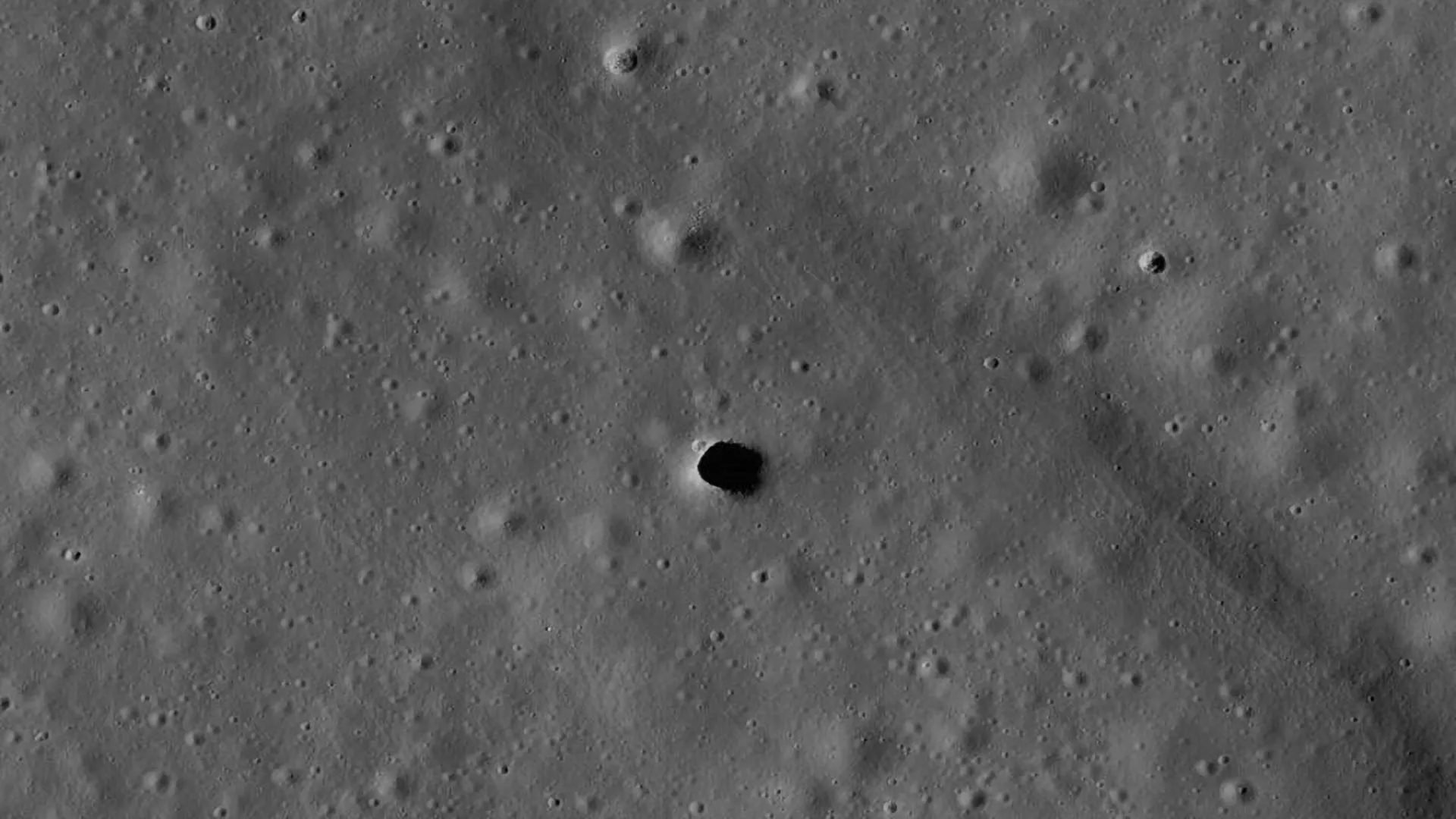
NASA has chosen a proposal led by the Planetary Science Institute to determine whether a potentially large cave stretches underground from the opening of a pit on the Moon. If such a cavern exists, it could eventually offer astronauts natural protection from radiation and the dramatic temperature changes experienced on the lunar surface.
The project will receive funding through NASA’s Payloads and Research Investigations on the Surface of the Moon (PRISM) program. PRISM sends scientific instruments to the lunar surface aboard spacecraft supplied by providers participating in the Commercial Lunar Payloads Services (CLPS) initiative.
GIMLI Will Probe Beneath the Moon
The selected project, known as the Geophysical Instruments for Marius Lunar pit Investigation, or GIMLI, is led by PSI Associate Director and Senior Scientist Than Putzig. PSI is working with Honeybee Robotics, which will construct much of the mission’s equipment and instrumentation. The instruments will travel aboard a lander and rover supplied through the CLPS initiative. PSI’s work will also be conducted in partnership with the Norwegian Space Agency.
“GIMLI represents the type of ambitious planetary science that PSI was built to pursue,” said PSI Director and CEO Amanda Hendrix. “Than and his team are taking a scientific question we’ve been studying from orbit and have developed a way to investigate it directly on the Moon. We’re excited to have PSI leading this effort and to be partnering with NASA and Honeybee Robotics to learn more about the Moon and its volcanic past.”
Scientists studying the Moon from orbit have found compelling evidence that caves and lava tubes could be hidden beneath its surface. GIMLI will concentrate on the Marius Hill Pit (MHP), a large opening located within one of the Moon’s most volcanically varied regions. Like other pits identified on the Moon, MHP could provide an entrance into underground structures created by ancient volcanic activity.
Rather than relying only on observations from above, GIMLI will give researchers an opportunity to examine MHP directly from the lunar surface.
Radar and Seismic Sensors Will Search for a Lava Tube
“It’s long been a desire of mine to reintroduce intentional active-source seismic methods to planetary science, as it has essentially not been done since the Apollo astronauts conducted the first seismic surveys on the Moon,” shared Putzig. “Combining that method with ground-penetrating radar and gravity measurements makes it all the more exciting, as these methods together will allow us to get a much better understanding of subsurface properties — including the anticipated detection of a lava tube extending away from the Marius Hills pit.”
To investigate what lies underground, GIMLI will combine ground penetrating radar, seismic sensors, and a gravimeter. Cameras will also photograph the lunar surface and the exposed walls of the pit. Used together, these instruments will search for a possible underground void extending from MHP and, if one is detected, help scientists estimate its dimensions.
Honeybee Robotics, a Blue Origin company, will be PSI’s commercial partner on the project. The company will provide project management services and construct instrumentation for the active source seismic system, the gravimeter, and the cameras. Honeybee Robotics will also help integrate the scientific instruments onto the lander and rover. Along with PSI, it will lead instrument operations after the spacecraft reaches the lunar surface.
Even No Cave Would Reveal New Lunar Geology
The mission could still produce important discoveries even if researchers find no cave or lava tube. Its measurements could help address another major question: How did the Marius Hill Pit form?
By examining the material surrounding and beneath MHP, scientists could gain new clues about the pit’s origin as well as the geology and volcanic history of the wider region.
The team also plans to study more than the possible underground structure. The surrounding area has experienced a long history of volcanic activity, and the walls of MHP expose layers of regolith and lava flows that normally remain buried. Examining these layers could show how lava once moved across and beneath the lunar landscape and whether individual eruptions were separated by long intervals.
Lunar pits are valuable not only because their walls expose otherwise hidden geology. Any underground spaces connected to them could also preserve evidence of the volcanic processes that helped shape the Moon.
A Window Into the Moon’s Volcanic Past
“Confirming a substantial lava tube would give us an insight into how volcanism operated on the Moon,” explained Gareth Morgan, PSI Senior Scientist and Deputy Principal Investigator on the GIMLI program. “Lava tubes are a common feature of basaltic volcanism on Earth, so identifying them on the Moon means we could use knowledge of such terrestrial caves to better understand lunar history.”
In addition to PSI and Honeybee Robotics, the GIMLI team includes Co-Investigators from Boise State University, Johns Hopkins University, the Lunar and Planetary Institute, and the University of Oslo. The Norwegian Space Agency will provide the ground-penetrating radar.
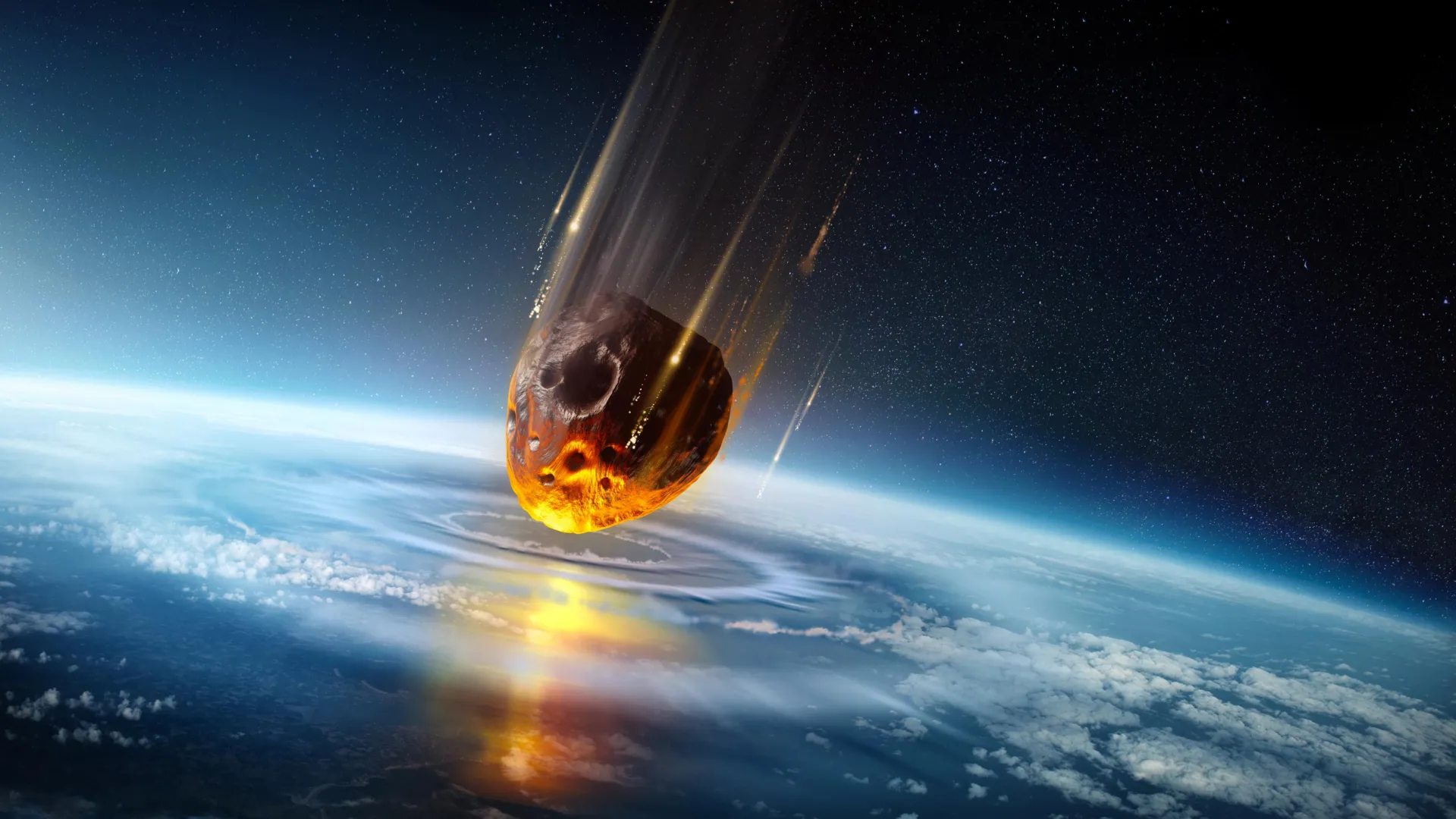
Researchers at The University of Texas at Austin have revised a key piece of Oklahoma’s geologic history, with possible implications for how scientists interpret major events in the history of life on Earth.
Beneath the town of Ames, Oklahoma, lies a meteor impact structure that stretches for miles underground. Layers of sediment now cover the crater, but it remains significant both scientifically and economically. The Ames impact structure is also a major producer of oil and gas.
A Crater Long Linked to an Ancient Meteor Event
For years, the Ames crater was thought to belong to a cluster of major meteor impacts across North America dating to roughly 467.5 million years ago. That period is known as the Ordovician Meteor Event.
Because so many impact structures appear to date from around the same time, some researchers have proposed that Earth may once have been surrounded by a Saturn-like ring of asteroid debris during the Middle Ordovician.
New work from UT researchers now shows that the Ames impact does not belong to that episode.
By dating zircon crystals taken from granite altered by the impact, the team determined that the meteorite struck about 370 million years ago during the Late Devonian. That makes the crater nearly 100 million years younger than previously believed.
“No matter what technique we used, it was coming back to this younger signal,” said lead author Elizabeth Catlos, associate professor at UT’s Department of Earth and Planetary Sciences.
The research was published in July in Meteoritics & Planetary Science.
Why the Earlier Date Was Misleading
Before this study, the Ames impact had only been dated using biological evidence. Researchers had found teeth from an ancient eel-like animal called a conodont preserved in the rock. Those fossils came from organisms that lived during the older Ordovician period.
But Catlos said the teeth were probably already millions of years old by the time the asteroid struck. The impact likely churned up older material and mixed the fossils into the rocks while still preserving them.
The zircon dating provides a very different timeline. It shows that the Ames crater could not have formed during the Ordovician Meteor Event.
Instead, its new age places it close to the Frasnian-Famennian mass extinction event, which occurred about 372 million years ago and wiped out a large proportion of marine life on Earth.
Tiny Zircon Crystals Preserve the Impact
Danny Stockli, dean of the Jackson School of Geosciences and a co-author of the study, said zircon U-Pb dating offers one of the most accurate ways to determine when events occurred deep in Earth’s past.
Zircon crystals can also preserve microscopic structures created by the intense pressures generated during an impact.
“These small crystals allow us to go back in time and learn about the major changes to Earth’s ancient landscapes,” Stockli said. “It would be great to do this for more of the meteor impact sites across the continent so we could get a more accurate timeline for these major events.”
To confirm that the zircons had actually been affected by the meteor strike, the team worked with NASA to image the crystals using cathodoluminescence and electron backscatter diffraction.
When zircon experiences the extreme conditions of an impact, it recrystallizes in a distinctive way. Those changes can be detected with these imaging techniques, allowing researchers to verify that the crystals recorded the collision itself.
A New Piece of a Mass Extinction Puzzle
According to Catlos, establishing more precise dates for mass extinctions and other major events is essential for understanding how Earth has changed over time.
One key question is whether extinction events were triggered primarily by forces from space, such as meteor impacts, or by processes within Earth, including episodes of massive volcanic activity.
“With this research, we’re basically taking a major pawn out of the Ordovician Meteor Event and dumping it into the Frasnian-Famennian event, and saying, ‘This is where this impact belongs,'” she said.
The project was initiated by former Jackson School of Geosciences graduate student Andrew Parisi, who graduated in 2018 and has since passed away. Parisi traveled to Oklahoma to obtain the Ames rock core from the Oklahoma Geological Survey, extracted zircon crystals from the material, and helped determine their ages.
Co-author Michael Brookfield, an affiliated researcher at the school, also passed away before the paper was published.
Research Professor Sean Gulick and Professor Emeritus Mark Cloos at the Jackson School also contributed to the research.
It’s well established that the universe is expanding, but there’s serious disagreement among scientists over how fast it’s happening.
Two of our best ways of measuring the cosmic expansion rate, the Hubble constant, give answers that are stubbornly at odds. This presents a major problem in modern cosmology known as the Hubble tension.
However, we wondered if an idea originally proposed to solve another cosmic mystery — the origin of cosmic magnetic fields — could help us unlock the mystery of the Hubble tension.
Our recently published research explores whether extremely weak magnetic fields left over from the earliest moments after the Big Bang might help us unpack the Hubble tension, while offering a glimpse into physics at energies far beyond anything achievable on Earth.
Astronomers use the Hubble constant as a measure of how fast the universe is expanding. It is named after the American astronomer Edwin Hubble who first discovered that the universe is expanding.
There are two conceptually different approaches to measuring the Hubble constant. One is indirect, based on predictions of our cosmological model tuned to match the patterns in the cosmic microwave background, the faint afterglow of the Big Bang.
Telescopes such as the Planck Space Telescope have measured tiny fluctuations in this ancient light, predicting a Hubble constant of about 67 kilometers per second per megaparsec (km/s/Mpc). A parsec is a unit of distance used in astronomy equal to about 3.26 light years, or 30.9 trillion kilometers. A megaparsec is one million parsecs.
The second method is more direct, similar to the one used by Hubble in the 1920s when he first demonstrated that the universe is expanding.
It measures how fast distant galaxies are moving away from our home galaxy, the Milky Way, by observing the brightness of supernovae explosions in these far away galaxies.
Type Ia supernovae are known to be “standard candles” because we know that their luminosity is the same wherever they are. That means we can judge the distance to them from how dim they appear to us.
To determine their intrinsic brightness, astronomers use other standard candles, such as Cepheid stars, in the galaxies nearby. These observations, which use the Hubble and James Webb space telescopes, give a higher value of around 73 km/s/Mpc.
This difference between the two measurements is called the Hubble tension. The difference between 67 and 73 may seem small, but it is statistically highly significant. If both methods are correct, then our standard model of cosmology must be missing something important.
Magnetic fields are everywhere in the universe. Planets and stars generate their own fields, but gaps in our understanding emerge when we attempt to explain the much larger scale magnetic fields threading galaxies and clusters, and possibly even cosmic voids.
One long-studied possibility is that magnetism first arose in the very early universe, long before the first stars or galaxies formed. These so-called primordial magnetic fields have been studied for decades, and searching for their imprints in the cosmic microwave background and other data offers a way to probe the early universe and the extreme energies that would have generated these fields.
In 2011, two of us (Karsten and Tom) pointed out that primordial magnetic fields would influence recombination — when electrons and protons first combined to form neutral hydrogen — and the universe turned from opaque to transparent. The first light able to travel freely from that moment on is what we now observe as the cosmic microwave background.
If present, primordial magnetic fields would speed up recombination by pushing and pulling on charged particles, making matter slightly clumpy. Where particles are more crowded, they are more likely to meet and form hydrogen.
Shifting the moment when the universe becomes transparent changes the size of the observed patterns in the cosmic microwave background. This effectively alters the cosmic ruler used to measure distances and, in turn, the value of the Hubble constant inferred from the model, helping to ease the Hubble tension. Two of us (Karsten and Levon) demonstrated this effect in 2020 using a simplified model of recombination.
In our new paper, we used the first full three-dimensional simulations of the primordial plasma with magnetic fields embedded in it, tracking how hydrogen forms.
We used the hydrogen formation history found through these simulations to compute predictions for how cosmic microwave background should appear if there were primordial magnetic fields, and tested these predictions against observations of the background.
The cosmic microwave background is extraordinarily sensitive to changes in recombination. If primordial magnetic fields altered it in a way that disagreed with observations, the idea could be ruled out. Instead, the data showed that our proposal remains viable.
Across multiple combinations of datasets, we find a consistent, mild preference for primordial magnetic fields, ranging from about 1.5 to three standard deviations. This is not yet a discovery, but a meaningful hint that they exist.
Equally important, the field strengths favored by the data, about five to 10 pico-Gauss today, are close to what would be needed for galaxy and cluster magnetic fields to originate from primordial seeds alone. A pico-Gauss is a unit used to measure the strength of magnetic fields.
Aside from helping ease the Hubble tension, if primordial magnetic fields are confirmed, they would open a new window into how the universe was when it was only split seconds old, perhaps offering a glimpse into important events such as the Big Bang itself.
Our results show that the proposal survives the most detailed test available today and provides clear targets for future observations. Over the next several years, we will learn whether tiny magnetic fields from the dawn of time helped shape the universe we see today and whether they hold the key to resolving the Hubble tension.
